Colour in the Garden
Colour in the real garden is a tricky topic. Garden colour is never the same as gardening book colour. This isn't to say that the specialised books on colour are hopeless - on the contrary, they can be amazing, and inspirational.

Yellows
Colour in a real garden has a strong seasonal, progressive element - yellows announcing spring, carry very different messages to yellows trying to be sunny and cheerful in winter. Seeing a colourful flower newly blooming can bring the joy of first discovery, but that same colour can be boring three weeks later.
The Blues
Real colours in the garden bring out reactions from the people seeing them. Colours can be associated with memories good and bad, and we've all worn atrocious colours thinking we looked just great. And some colours just have a bad reputation - ever had 'The Blues'? I adore 'The Blues' in my garden!

Blues
Gardeners don't need a reason to change their mind about colours, either. One year this happened to me mid-summer with the colour purple.
Problems with Purple
Purple was everywhere, thanks to the self seeding pansies and violas, and I decided one afternoon that it was all coming out. That was that.
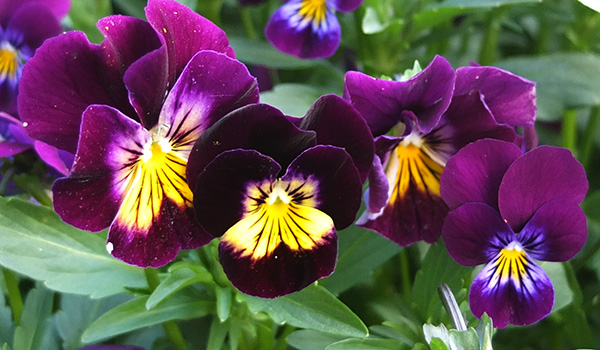
Self-sown Purple Violas
Reading about my zealous purge later is quite puzzling - it must have been a seasonal episode, because I love my purple pansies now. I celebrate their purple-ness more than ever, hee hee...
Much Maligned Magenta
The colour magenta is much maligned, or feted, depending on how devilish one feels. But compare Magenta Lychnis, flowering mid-summer, with its timid white and pale pink siblings - there's no comparison! Magenta is definitely a 'me' colour, though I'd never wear it. Magenta-purple was the first strong colour I saw here in the garden. We moved into the house and garden in spring, and Honesty was in bloom everywhere. I'd never seen Honesty before, and was totally overwhelmed by its generosity. In memory of those first days I cherish that colour. I've deliberately tried to buy irises the same colour to carry on the feeling into November.
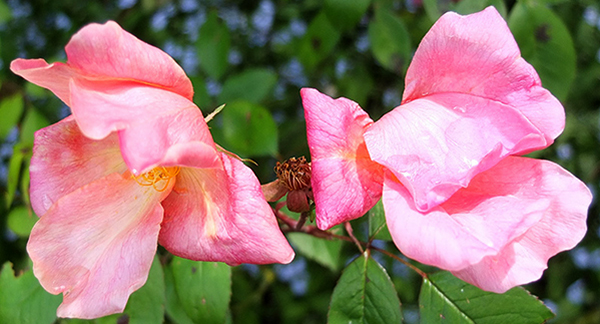
Mutabilis Roses
From where I'm sitting at the moment I can see the rose Mutabilis glowing in the late afternoon sun. Such an amazing range of pink shades - just wonderful. This rose reaffirms my love of the colour pink, a colour which I don't feel very confident with. I think I sowed too many of those bright pink Lavatera annual flowers in an early year here, and got a bit "pinked-out".

Pinks
Every now and then I go off blue/grey. One year I replaced all the Blue-green Stachys (Lambs' Ears), replacing them with the soft lime green version. I decided that blue/green was too dull, though I seemed to cope with the big bold blue/green hostas.
Go Green!
The green in the leaves of the variegated perennial Scrophularia is one of the best greens - a soft, clean green. With sun at the right angle the big veined leaves of Nicotiana Sylvestris are a beautiful green.

Greens
Greens are great. Roses look good because they have a backdrop of green. That's the theory, anyway, which bimonthly rose sprayers agree with.
Colour Phases
Every cottage gardener goes through the 'apricot and white only' foxglove phase, ripping out any seedlings with suspiciously dark stems. Hot border converts find themselves embracing the same orange and red dahlias they once dismissed as laughably suburban. Bright red pelargoniums become fashionable.
Colour Co-ordination

light green and cherry red
Once I attempted some well researched colour co-ordination. The peachy colour of the azaleas would be echoed by the same colour in the chrysanthemums down the border. It seems so obvious to me now that these flowers were months (seasons, actually) apart in flowering times - but not to a brand new gardener, desperately keen to do the right thing.
Colour Crisis
There was a colour crisis the year after the Icing Sugar Border was planted. It was named for all its frothy white and pink roses and perennials - it looked like someone had sprinkled icing sugar and chopped marshmallows over everything. I loved this border for weeks, but suddenly one day a distant memory of sweet sickly party food must have resurfaced. In my eyes the border was ruined, and like a lover on the rebound I turned to yellow, my antidote for overindulging in pink and white. I poked in daylilies, yellow toned Phormiums, Hypericum...
I've stopped trying to control colour. Do I care if the pansies are having a colour duel with the terracotta pot? What's wrong with bright pink, anyway? I'll consider it a living memorial to my daughter's first ballet tutu, and enjoy it - until I change my mind!